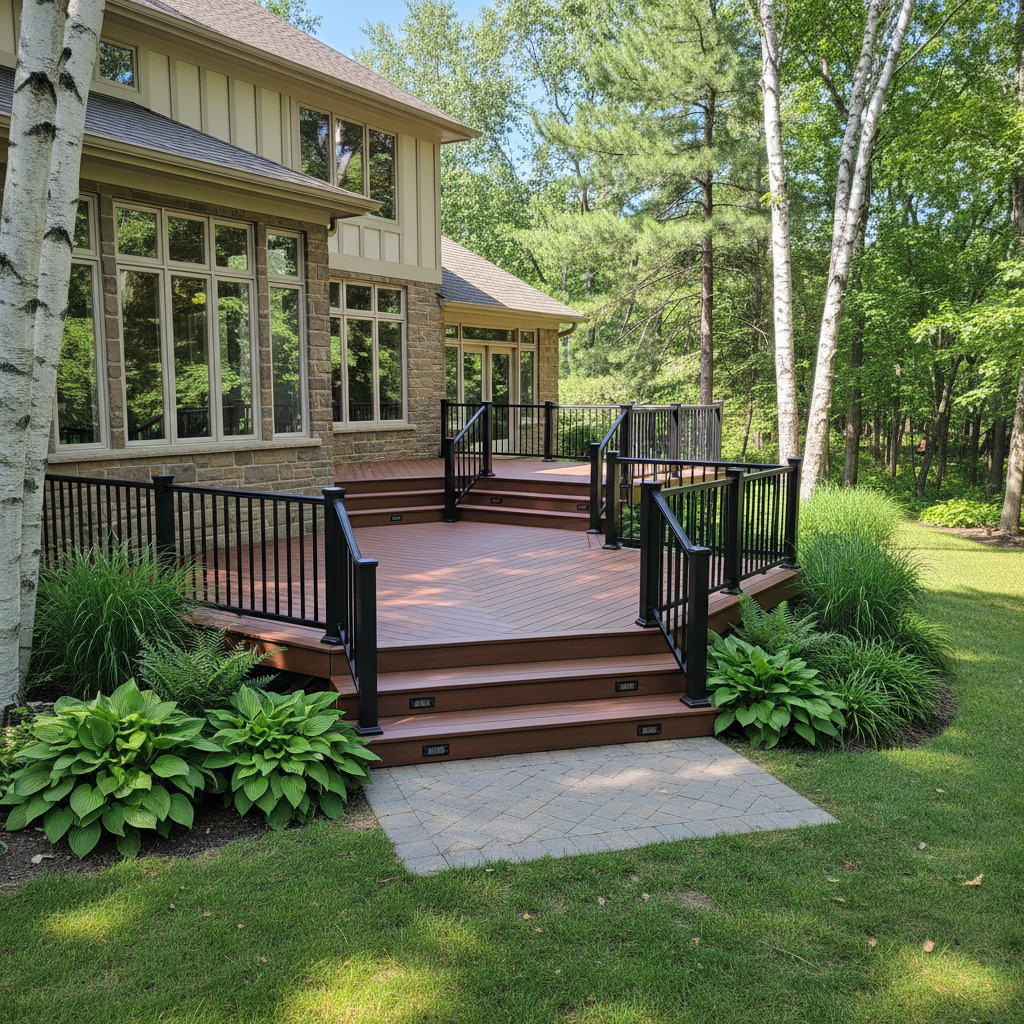
So, you're thinking about a new Trex deck? That's awesome! It's a really great product, especially for our Minnesota weather. But, you know, I've seen homeowners make some pretty common blunders that can turn an exciting project into a real headache. Let's chat about what to watch out for, so you don't end up wishing you'd done things differently.
Not Giving Design Its Due
This is a huge one, folks. I totally get it – you want to get straight to building. But a Trex deck isn't just some flat rectangle tacked onto the back of your house anymore. There are so many cool options: multi-level layouts, built-in lighting, custom railings, even integrated planters or seating. A lot of people just point to a picture online and say, "I want that." But honestly, does "that" really fit your yard, your daily life, or your home's style?
You really need to spend some time thinking about how you'll actually *use* the space. Do you throw a lot of parties? Need a quiet spot for your morning coffee? Got kids who need room to run around? Don't just focus on the decking material itself. Think about how you'll move from your house to the deck, where the sun hits at different times of day, and how much privacy you'll have from the neighbors. For instance, many homes in North Oaks have those gorgeous, sprawling backyards, but sometimes that means you're pretty exposed to the lot next door. A smart design can easily add privacy screens or pergolas placed just right.
Seriously, don't rush the design. A good contractor, like us at Alpha Deck Builders, will walk you through all the possibilities and help you picture the finished deck. We'll ask you a ton of questions about how you live, too.
Forgetting About What's Underneath
Trex is fantastic stuff. It lasts ages, needs hardly any upkeep, and looks sharp. But here's the kicker: Trex is only the surface. What's *beneath* it — the framing, the footings, the ledger board — that's the real backbone of a deck that lasts. I've seen way too many projects where homeowners obsess over the decking color and pattern, but barely even ask about the foundation.
A common mistake is just assuming every contractor builds to the same standards. They don't, not by a long shot. Some will cut corners on the framing, maybe using smaller joists or fewer fasteners than they should. What happens then? You get a bouncy deck, or worse, serious structural problems down the road. Our freeze-thaw cycles here in Minnesota are brutal on foundations, you know. You need proper footings that go deep enough to get below the frost line — usually 42-48 inches around here — to stop frost heave. If a contractor only talks about the Trex and breezes right past the substructure, that's a big red flag. Ask them about their framing materials, how they fasten things, and exactly how they make sure it's stable.
Picking the Lowest Bid Without Doing Your Homework
Everybody wants a good deal, I totally get that. But with a deck, especially a Trex deck, the cheapest bid often ends up being the most expensive in the long run. I've seen homeowners get burned badly by just going with the lowest price without checking references, looking at their past work, or even verifying their insurance and licensing.
Here's why that's a mistake: a low bid often means a contractor is cutting corners somewhere. Maybe they're not fully insured, which leaves *you* on the hook if someone gets hurt on your property. Or perhaps they're using cheaper labor, or they haven't even factored in proper permits and inspections. Here in North Oaks, we've got specific building codes, and you absolutely want a contractor who knows them inside and out. An inexperienced or fly-by-night crew might build something that doesn't pass inspection, leaving you with a costly mess to fix. What a pain!
Get multiple bids, absolutely. But compare them carefully. Ask for a super detailed breakdown of costs, including materials, labor, permits, and any site prep. If one bid is way lower than the others, ask them why. Don't be shy about asking for proof of insurance and references from recent clients. A good, reputable contractor will be happy to give you all of that.
Not Understanding the Upkeep (Yes, Even Trex Needs Some!)
Trex often gets marketed as "maintenance-free," and while it's a huge improvement over wood, it's not entirely hands-off. This misunderstanding can really lead to disappointment. You won't be staining or sealing it, that's true, but you still need to clean it. Dirt, pollen, leaves, and even mold can build up, especially in shaded spots or after our long, damp spring seasons.
I've seen decks that look pretty grimy after a few years because the homeowners figured they could just ignore them. A simple wash with soap and water, or a gentle pressure wash (on a low setting, mind you, or you could damage the surface!), is usually all it takes. But if you let it go too long, it can be a lot harder to get clean. Make sure you understand what the manufacturer suggests for cleaning and upkeep. It's minimal, but it's definitely not zero.
Avoiding these common mistakes will save you headaches, money, and make sure you get the Trex deck you've always wanted. Do your homework, ask tough questions, and don't settle for anything less than quality work.