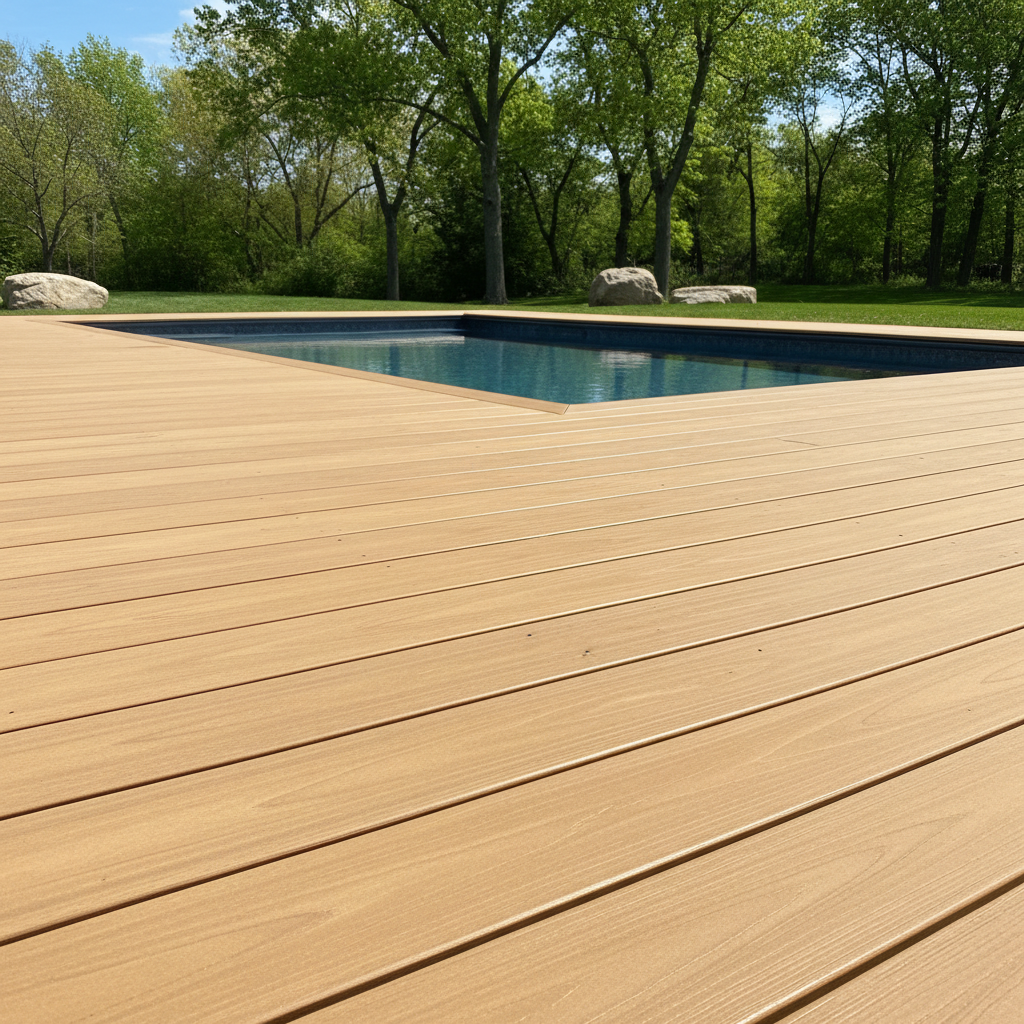
What's the best material for a pool deck around here?
That's usually the first thing folks ask me, and it's a good question, especially with our Minnesota weather. For pool decks, you're really looking for something that stands up to water, sun, and those big temperature swings we get. I see a lot of composite decking, and for good reason. Brands like Trex or Azek are fantastic. They don't splinter, resist fading, and cleaning them is a breeze. You won't be staining or sealing them every year, which is a huge plus when you've got a pool to enjoy. Natural wood like cedar or redwood can look beautiful, but it demands a lot more upkeep – regular sealing is a must to prevent rot and warping from all that splashing. Pressure-treated wood is an option if budget is tight, but it's not as comfortable underfoot and still needs more attention than composite. For pool surrounds specifically, I'm always leaning towards composite for its low maintenance and durability.
How important is drainage for a pool deck, really?
It's not just important, it's critical. Think about it: you've got thousands of gallons of water in that pool, and people are constantly getting in and out, splashing, dripping. If that water just sits on your deck or, worse, drains towards your house or foundation, you're asking for trouble. We always design pool decks with proper grading and drainage solutions. Sometimes that means a slight slope away from the house and pool, sometimes it involves channel drains or even French drains if the yard's natural grade isn't cooperating. Around here in North Oaks, with our clay-heavy soils in some areas, water doesn't always perk through the ground quickly. So, getting that water away from your home's foundation and off the deck surface is a top priority. It prevents standing water, which can lead to slippery spots, algae growth, and long-term damage to the deck structure itself.
Can I put a hot tub on my new pool deck?
Absolutely, but you need to plan for it from the very beginning. A hot tub full of water and people is incredibly heavy – we're talking thousands of pounds. A standard deck built for patio furniture and people just won't cut it. When we're designing a deck that will hold a hot tub, we beef up the framing significantly. That means more joists, closer spacing, and often larger beams and footings. Sometimes, depending on the size and placement of the hot tub, we'll even recommend a dedicated concrete pad underneath it that's flush with the deck surface. Don't try to add a hot tub to an existing deck without having a professional assess the structure first. It's a safety issue, and you don't want your hot tub ending up in your basement.
What's the deal with deck lighting around a pool?
Deck lighting isn't just for ambiance, especially around a pool. It's a safety feature, plain and simple. You want to make sure people can see where they're going, identify steps, and avoid tripping hazards when it's dark. We often recommend a combination of post cap lights, recessed stair lights, and sometimes even subtle perimeter lighting. LED lights are the way to go – they're energy-efficient, last forever, and don't get hot, which is important when little hands might be touching them. Low-voltage systems are easy to install and safe. Good lighting extends your usable pool time into the evening and makes the whole area feel more inviting and secure.
How long does a pool deck project typically take?
That's like asking how long a piece of string is, but I get it. Everyone wants an idea. Once we've got the permits sorted – and that can sometimes be the longest part, depending on the city – the actual build time for a standard pool deck can range anywhere from a week to three weeks. It really depends on the size, complexity, and materials chosen. If we're doing a multi-level deck, or incorporating built-in seating, pergolas, or complex railing systems, it'll naturally take longer. Weather plays a huge role too; you can't pour footings in a blizzard or stain wood in the rain. We always try to give you a realistic timeline upfront, and Alpha Deck Builders works hard to stick to it, but sometimes Mother Nature has other plans.
Do I need a permit for a new pool deck?
Almost always, yes. Any significant outdoor structure like a deck, especially one attached to your house or over a certain height, will require a building permit from the city or county. This isn't just red tape; it's to ensure the deck is built to code, safely, and won't be a hazard. The permit process usually involves submitting plans, and then inspections at various stages of construction – like footing inspection, framing inspection, and a final inspection. We handle all the permit paperwork for our clients, it's part of the service. Trying to skip the permit can lead to big headaches down the road, including fines or even having to tear down the structure. It's just not worth the risk.