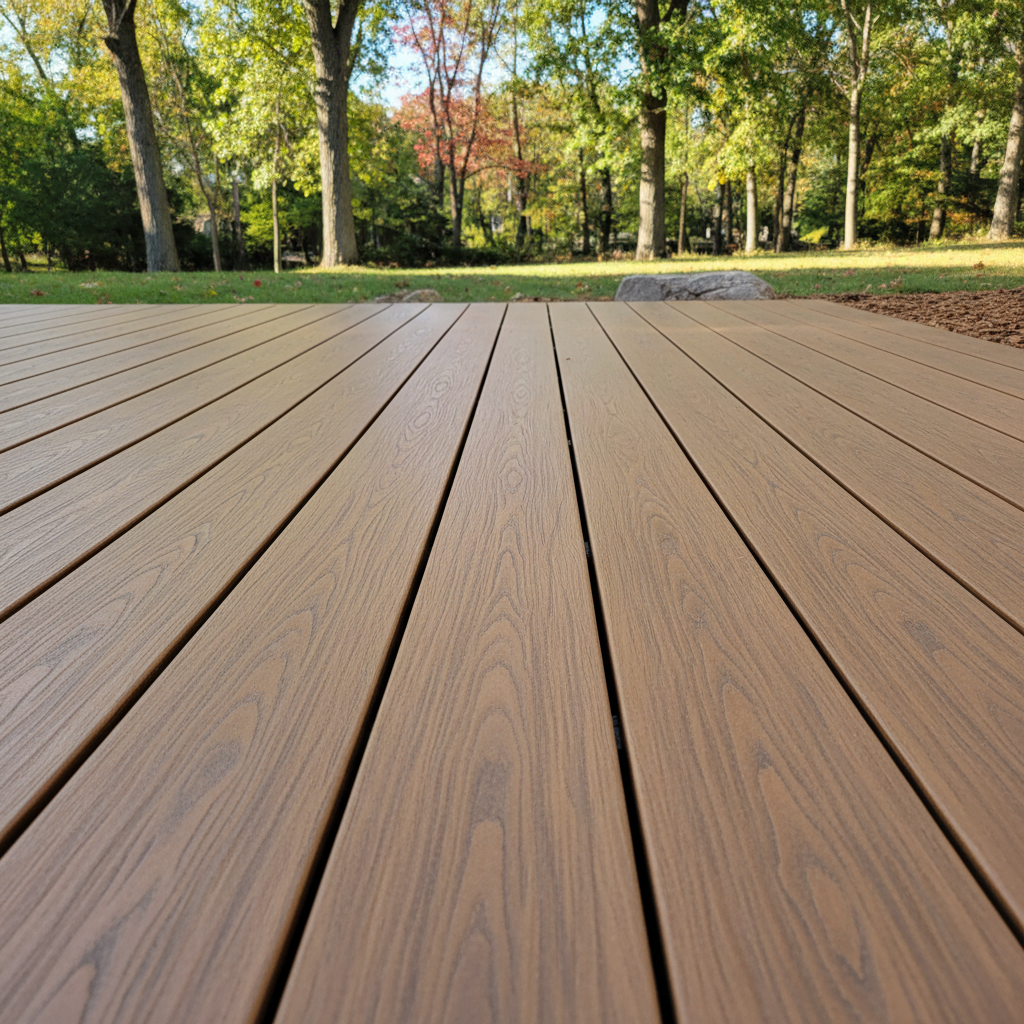
What exactly is a composite deck made of?
That's a good question, because it's not simply plastic. Most composite decking boards are actually a blend of wood fibers and recycled plastic. We're talking sawdust, wood chips, and plastic from things like milk jugs or grocery bags, all mixed together with some bonding agents and dyes. Then, usually, they're extruded into board shapes. Some brands, like Trex or Azek, even have a cap or shell around the core, which gives them extra protection against fading and stains. It's this particular mix of materials that gives you those low-maintenance benefits without completely losing the feel of wood.
Is composite decking really maintenance-free?
Nope, definitely not 'maintenance-free.' That's a marketing term, and frankly, it's pretty misleading. 'Low-maintenance' is a much more accurate description. You won't be staining or sealing it every couple of years like you would with cedar or treated lumber, that's for sure. But you still need to clean it. Dirt, pollen, leaves, and especially mold or mildew can build up, particularly in shaded areas or after our long, damp Minnesota springs. A good scrub with soap and water, or a gentle power wash (just be careful with the pressure, you don't want to damage the boards), is usually all it takes once or twice a year. If you let it go, it'll just look dingy, like anything else left out in the elements.
How does the cost of composite compare to wood?
Up front, composite decking is almost always more expensive than a traditional wood deck, sometimes significantly so. For materials alone, you're looking at anywhere from 1.5 to 3 times the cost of pressure-treated lumber, and often even more than cedar. However, you've got to consider the long game, right? With wood, you're going to spend money and time every few years on cleaning, sanding, staining, and sealing. Over 10-15 years, those costs really add up. When you factor in that ongoing maintenance, composite can actually become the more economical choice over its lifespan. It's an investment, really, one that pays off in time saved and fewer recurring expenses.
Can composite decks handle our crazy North Oaks weather?
They're built for it, generally speaking. Manufacturers know these decks are going into all sorts of climates. The biggest concern here in North Oaks, with our extreme temperature swings from brutal cold to humid summers, is expansion and contraction. Composite boards will expand and contract more than wood with temperature changes. A good builder, like us at Alpha Deck Builders, knows how to account for this by leaving proper gaps between boards and at the ends. If it's not installed correctly, you can end up with buckling or gaps that are too wide. Also, the cap layer on many composite boards helps them resist fading from our strong summer sun and stands up well to snow and ice.
Do composite decks get hotter than wood decks in the sun?
They absolutely can, especially darker colors. This is one of the most common complaints I hear, actually. Because of the plastic content, composite boards tend to absorb and retain heat more than natural wood. On a hot, sunny summer day, a dark gray or brown composite deck can get uncomfortably hot to walk on barefoot. Lighter colors will be cooler, but still likely warmer than a comparable wood deck. If you've got kids or pets who'll be spending a lot of time on the deck, or if your deck gets full sun all day, this is definitely something to consider. It's not a deal-breaker for most, but it's important to be aware of.
What about scratching and fading?
Modern composite decks, especially those with a cap or shell, are pretty resistant to scratching and fading, but they're not indestructible. Heavy furniture being dragged across it, or sharp objects, can still leave marks. As for fading, the technology has come a long way. Early composite decks were notorious for fading and chalking, but today's products have UV inhibitors built into that cap layer. They'll still experience some slight color change over their lifetime, just like anything exposed to the sun, but it's usually very minimal and even. The key is choosing a quality brand and understanding that 'fade-resistant' doesn't mean 'never fades at all.'
Are there any specific issues to watch out for with composite in North Oaks?
Beyond the general maintenance and heat considerations, one thing I've seen in some of the older, wooded North Oaks neighborhoods is an increased tendency for mildew or algae growth on composite decks, especially those built under mature oak or pine trees. The shade and the moisture from falling leaves and needles create a perfect breeding ground. This isn't unique to composite, mind you—wood decks get it too—but it can be more noticeable on a smooth composite surface. Regular cleaning, maybe even a bit more often than once a year if your deck is in a very shaded, damp spot, will keep it looking good. Also, make sure your downspouts aren't draining directly onto the deck; that's a recipe for trouble no matter the material.