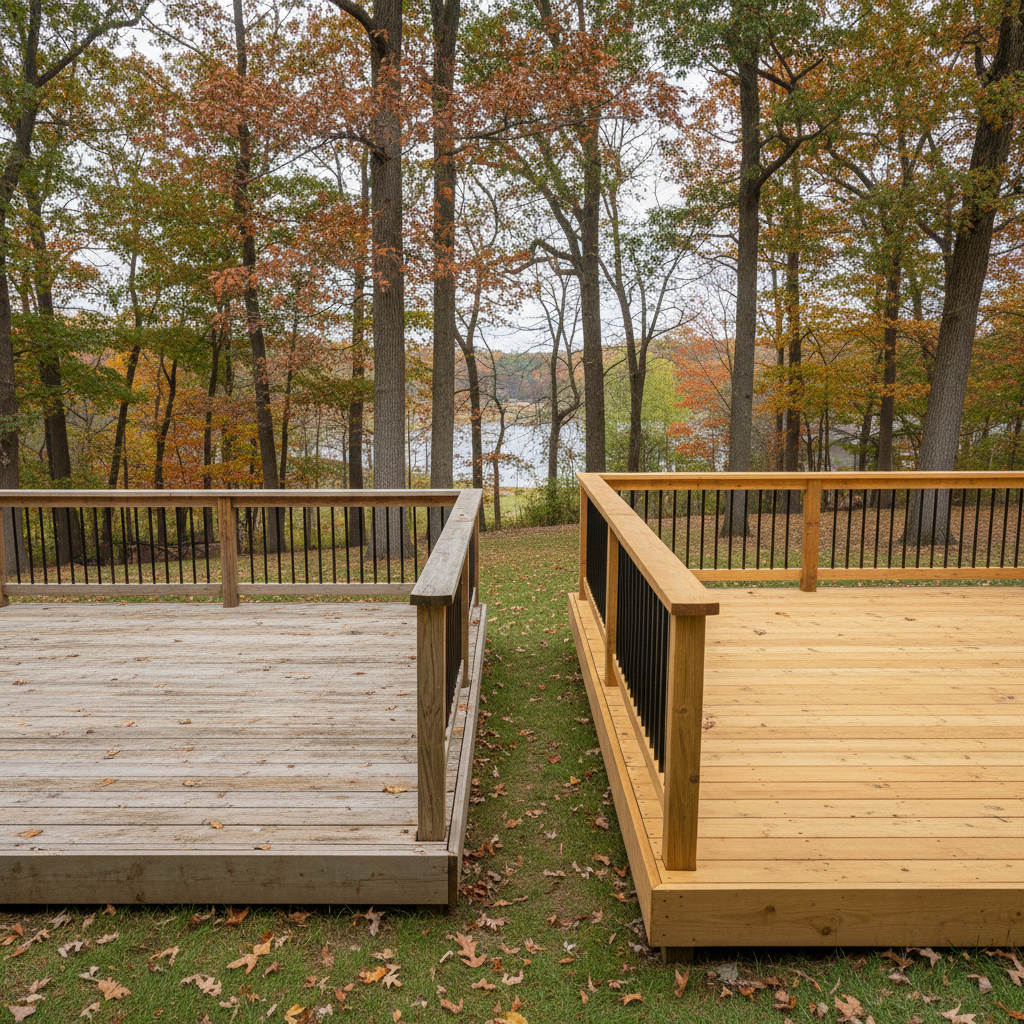
Thinking about a new wooden deck? That's a great choice, honestly, there's nothing quite like it. But when we talk about wood, you've got options. Two of the most common ones I work with here in North Oaks are cedar and pressure-treated lumber. Homeowners often ask me which one's "better," and the truth is, "better" really depends on what you're hoping for. Let's dive in.
Pressure-Treated Lumber: The Workhorse
Most of the decks I built early on, and still a good chunk today, use pressure-treated (PT) lumber. It's usually southern yellow pine, treated with chemicals to fight off rot, fungal decay, and insect infestation. That's a huge deal here in Minnesota, especially with our freeze-thaw cycles and the damp spots you sometimes find in shaded backyards, like those around Pleasant Lake.
Cost
This is often where PT shines. It's usually the most budget-friendly choice upfront. You'll get more square footage for your money compared to cedar, and that can really add up on bigger deck projects.
Durability & Maintenance
PT is tough. Those chemicals really do their job, making it super resistant to the elements. It's not totally invincible, though. It can still warp, crack, and splinter if you don't take care of it. You'll want to clean it every year and put on a good quality stain and sealant every 2-3 years. This protects the wood from UV damage and moisture, keeping it looking good and making it last longer.
Appearance
Fresh PT lumber usually has a greenish tint from the treatment, though newer treatments often look clearer. It's not the most attractive wood all by itself. It does take stain well, though, so you can get a wide range of colors. The grain isn't as pronounced or as beautiful as cedar, but once it's stained, it's a solid, dependable look.
Cedar: The Natural Beauty
Now, let's talk about cedar. Specifically, Western Red Cedar is what we typically use for decking. It naturally resists rot, decay, and insects because of the oils and compounds right there in the wood. No chemicals needed, which some homeowners really appreciate.
Cost
Cedar generally costs more than pressure-treated lumber. Sometimes, it's significantly more. If you're on a tight budget, this might be a deal-breaker. But you're paying for that natural beauty and its built-in resistance.
Durability & Maintenance
Cedar is naturally durable, but it's a softer wood than PT pine. It's more likely to get dings and scratches. If you leave it untreated, cedar will weather into a gorgeous silvery-gray color, which some people absolutely adore. If you want to keep its natural reddish-brown color, you'll need to clean and apply a UV-protective sealant or stain every 1-2 years. It's a bit more work to keep that fresh look than with PT, but the results? Stunning.
Appearance
This is cedar's strong suit, no doubt about it. It has a gorgeous, rich color, a distinctive grain, and a wonderful smell when we first install it. It just looks premium. For homes that want a more natural, elegant aesthetic, cedar is often the top choice. It really complements the architectural styles you see in areas like the White Bear Yacht Club neighborhood.
My Take for North Oaks Homeowners
So, which one should you choose? Here's how I usually break it down for folks right here in North Oaks:
If budget is your main concern, and you're okay with a good stain doing most of the aesthetic heavy lifting, go with pressure-treated. It's a reliable, strong material that will last for decades with proper care. A fantastic value, truly.
If you prioritize natural beauty, a chemical-free option, and a premium look, and you're willing to invest more upfront (and maybe a little more in maintenance to keep its color), then cedar is your winner. There's just no denying its curb appeal.
Both options need maintenance; that's just a given for any wooden deck in Minnesota. You can't just build it and forget it, especially with our harsh winters and humid summers. Whether Alpha Deck Builders is installing PT or cedar, we'll make sure it's built right from the ground up. That way, you've got a solid foundation no matter which wood you pick. Just remember to treat it well, and it'll treat you well for years to come.